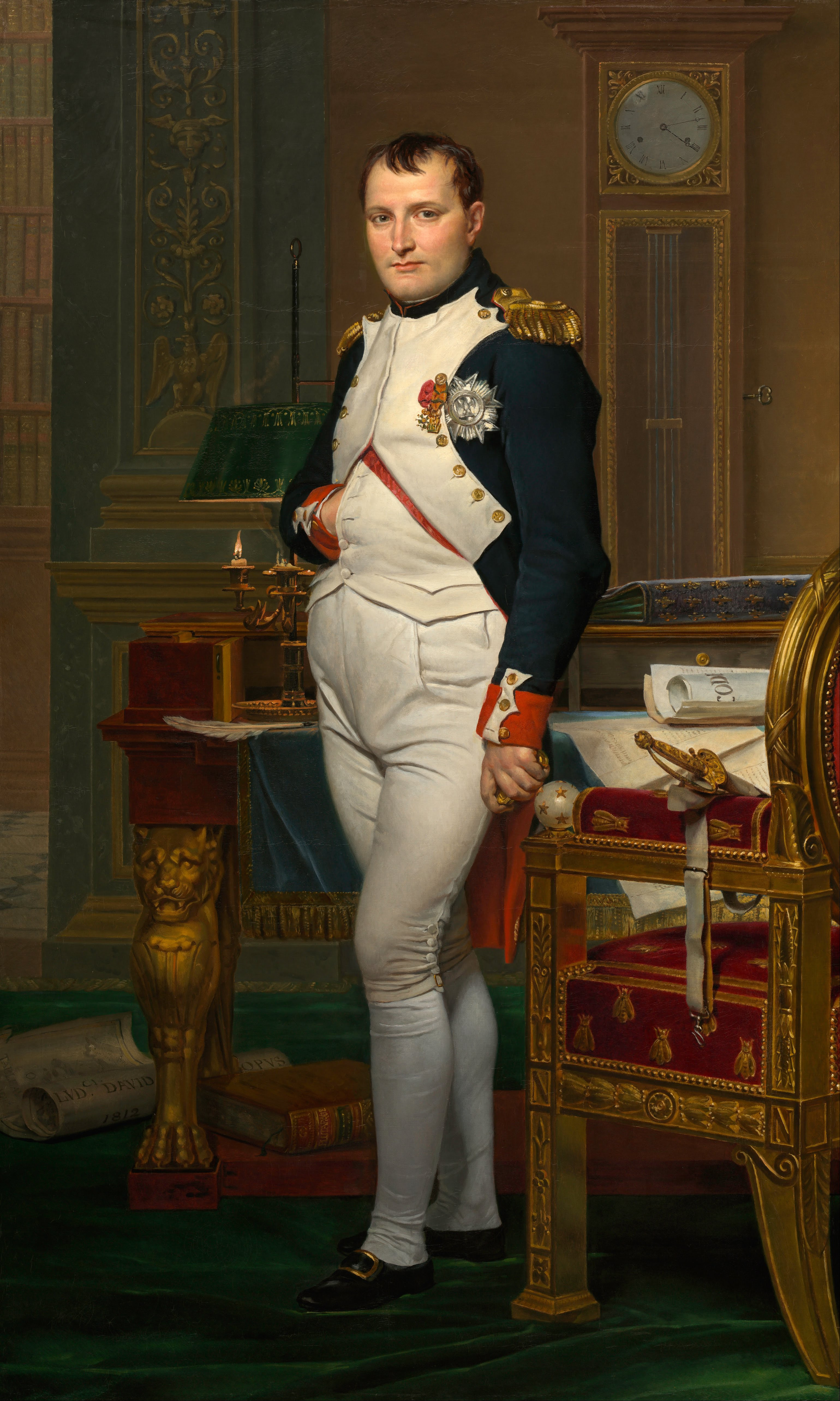
Napoleon Bonaparte was the First Consul and later Emperor of France whose decision to send the Leclerc expedition in 1802 — with the secret intention of restoring slavery — transformed what might have been a negotiated settlement with Toussaint Louverture into a war of extermination.
He dispatched the largest overseas expedition in French history, arrested and imprisoned Toussaint without trial at Fort de Joux (where he died in 1803), and restored slavery in French colonies by decree on May 20, 1802. The news of its enforcement in Guadeloupe reached Saint-Domingue in July 1802 and catalyzed the final phase of Black resistance. His armies lost nearly 50,000 soldiers to yellow fever and Haitian resistance; the defeat forced the Louisiana Purchase in 1803 and ended France's American empire.
In the ScholarshipHow historians have read this figure.
How historians and scholars have interpreted this figure across different analytical traditions.
Dubois's Avengers of the New World reads Napoleon Bonaparte as the figure who decided to reverse emancipation and restore the plantation system across the French Caribbean — a decision that made the Haitian Revolution's final phase not a continuation of the earlier revolutionary period but a war of racial extermination. Dubois situates Napoleon's colonial project within his broader imperial ambitions: Saint-Domingue's sugar revenues were essential to funding Continental expansion, and the Black military leadership that had built the colony's autonomous government under Toussaint represented an unacceptable challenge to imperial authority. Napoleon's decision to dispatch Leclerc's expedition, and his simultaneous restoration of slavery in Guadeloupe, appear in Dubois's account as the turning point that made Haitian independence inevitable — the empire that tried to reverse the revolution produced the conditions for the revolution's most radical conclusion.
Napoleon's decision to reverse emancipation made Haitian independence inevitable — the empire trying to restore slavery produced the conditions for the revolution's most radical conclusion: a Black republic that permanently broke with the colonial order.
Bell's Toussaint Louverture: A Biography reads Napoleon through his relationship with Toussaint — the metropolitan political figure whose decision to dispatch the Leclerc expedition removed the one leader who had managed the complex balance between Haitian autonomy and French sovereignty. Bell traces Napoleon's calculation: that Toussaint's authority was the source of colonial stability but also the primary obstacle to restoring French control, and that removing Toussaint through treachery would eliminate both the obstacle and the stability simultaneously. The expedition's failure proved the calculation catastrophically wrong — without Toussaint, the Black military leadership had no incentive to negotiate and every reason to fight to the death.
Napoleon's calculation — that removing Toussaint would restore French control — eliminated both the obstacle to metropolitan authority and the stability that Toussaint had built, leaving the Black military leadership with every reason to fight to the death.
Verified ClaimsWhat the corpus says, and where.
dispatched Leclerc expedition of approximately 20,000 soldiers
secondary
1 source
TimelineAcross the historical record.
- 1799
First Consul of France
Held executive power as First Consul from 1799; ordered the Leclerc expedition and the restoration of slavery in French colonies in 1802.
- 1802
Leclerc Expedition
Ordered and planned the 1802 expedition — the largest overseas military deployment in French history — with the secret three-stage plan to disarm and re-enslave the Black population.
- 1804
Emperor of France
Declared Emperor in 1804, the same year Haitian independence was proclaimed — the consequence of the military defeat his colonial policy had produced.
- 1804-01-01
Haitian Declaration of Independence
His failed reconquest directly produced Haitian independence; the defeat of his armies was the military precondition for Dessalines's January 1804 proclamation.
RelationshipsPeople connected to this life.
- OpposedJean-Jacques Dessalines
Dessalines defeated the Leclerc-Rochambeau forces and proclaimed Haitian independence on January 1, 1804; Bonaparte's secret orders identified him as one of three Black leaders who had to die.
- OpposedToussaint Louverture
Ordered Toussaint's arrest in June 1802 and his deportation to Fort de Joux in France, where he died in April 1803 — imprisoned without trial, Napoleon never answering his letters.
- CommandedDonatien-Marie-Joseph de Rochambeau
Appointed Rochambeau to replace Leclerc as commander; Rochambeau prosecuted a war of racial extermination that accelerated French defeat.
- CommandedCharles Victor Emmanuel Leclerc
Napoleon's brother-in-law, whom he appointed to lead the 1802 expedition to reconquer Saint-Domingue; Leclerc died of yellow fever in November 1802.