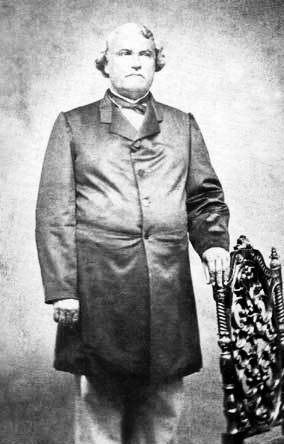
Thomas Madiou was the first major national historian of Haiti — a Black intellectual and educator born in 1814, the first generation raised after independence, whose three-volume Histoire d'Haiti (1847–1848) predated Ardouin's Études and set the early terms of Haitian national historiography.
He gave the revolution a world-historical and explicitly African-centered frame, treating it not as a colonial anomaly but as the vindication of a people descended from Africa and forged through enslavement, war, and nation-making. Because he wrote closer to the revolutionary period and interviewed survivors, Madiou preserves a kind of historical temperature that later historians could no longer access directly — his Battle of Crête-à-Pierrot account drew on veteran testimony gathered in the 1840s. Fick treats him alongside Ardouin as the two foremost Haitian national historians, noting both figures' biases; Madiou's Black nationalist ambition is the primary frame that distinguishes his political vision from Ardouin's mulatto-elite perspective.
TimelineAcross the historical record.
- 1802-03-04
Battle of Crête-à-Pierrot
His account of the Battle of Crête-à-Pierrot was drawn from interviews with veterans in the 1840s, making it a quasi-primary source — direct recording of participants' memories that preserves revolutionary detail unavailable to later historians.
- 1847
National Historian of Haiti
Published the three-volume Histoire d'Haiti (1847–1848), the first major national history of the Haitian Revolution and independence period; worked as an educator and public intellectual, drawing on interviews with revolutionary survivors.
RelationshipsPeople connected to this life.
- OpposedBeaubrun Ardouin
Madiou and Ardouin are the two foremost early Haitian national historians but represent different political visions: Madiou's Black nationalist frame contrasts with Ardouin's mulatto-elite perspective — a historiographical tension that runs through all subsequent debate about the revolution's meaning.
- Related toAlexandre Pétion
Alexandre Pétion
- Related toMacaya