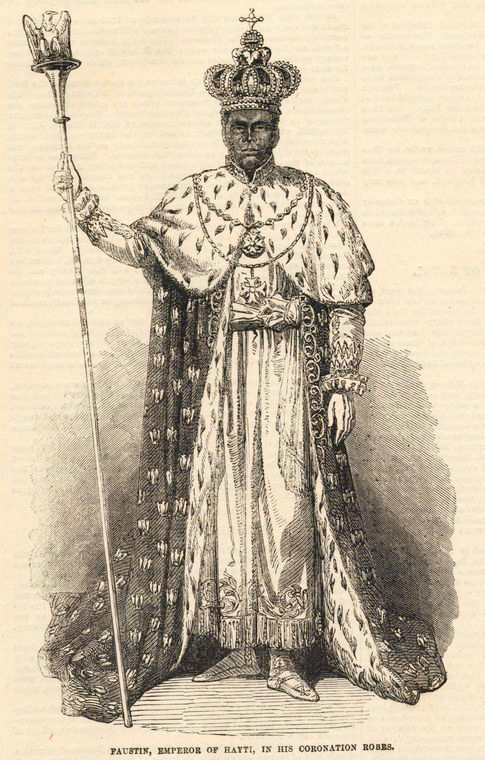
Faustin Soulouque became president of Haiti in 1847 and proclaimed himself Emperor Faustin I in 1849, ruling until he was overthrown by Nicolas Geffrard in 1859.
Dubois documents how his reign was distorted by racist European caricature as much as by his own authoritarianism — foreign press mockery of his imperial ceremony and court culture served as a vehicle for denying the legitimacy of Black self-governance. Nicholls shows how Soulouque entered the long contest between black and mulatto political legends in nineteenth-century Haiti, with noiriste later writers claiming him as a representative of peasant and black-majority politics against the mulatto elite that had marginalized him before his rise. His overthrow by Geffrard restored mulatto political dominance and sent Soulouque into exile in Jamaica.
In the ScholarshipHow historians have read this figure.
How historians and scholars have interpreted this figure across different analytical traditions.
TimelineAcross the historical record.
- 1847
President and Emperor of Haiti
Served as president of Haiti (1847–1849) and then as Emperor Faustin I (1849–1859); his imperial reign was distinguished by authoritarian consolidation, noiriste politics, and eventual overthrow by a mulatto-led military coalition.
RelationshipsPeople connected to this life.
- OpposedNicolas Geffrard
Nicolas Geffrard led the military uprising that overthrew Soulouque in January 1859, sending him into exile and restoring mulatto political dominance in Haiti.
- Related toMarie-Claire Heureuse Félicité
Claire Heureuse