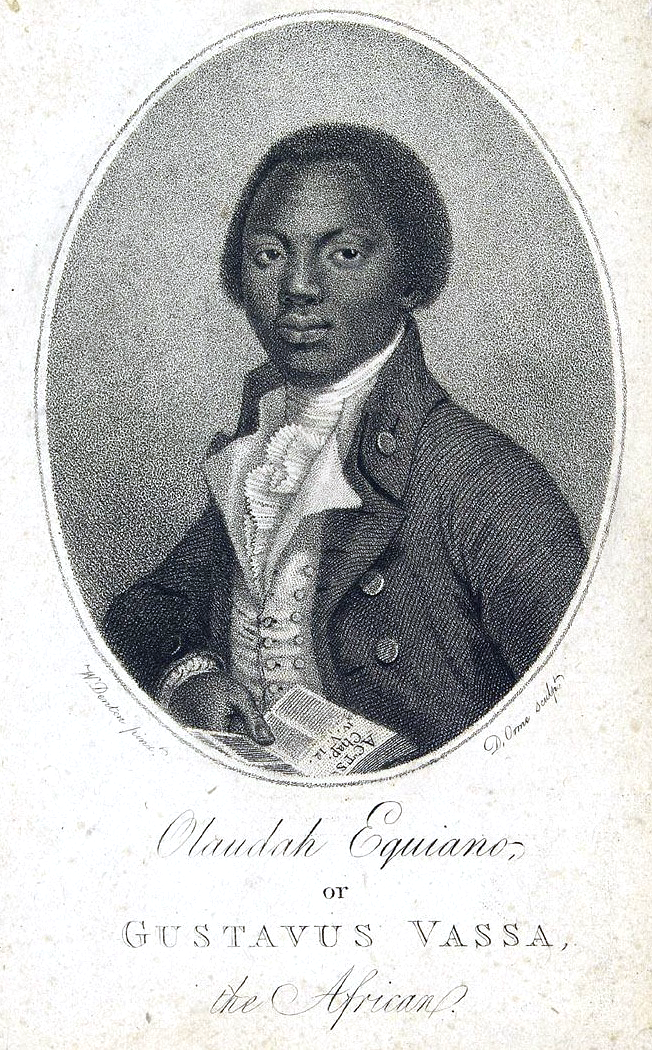
Olaudah Equiano was an Igbo-born survivor of the Atlantic slave trade who was captured as a child, survived the Middle Passage, was enslaved in the Caribbean and North America, purchased his own freedom, and became one of the most important abolitionist witnesses of the eighteenth-century Atlantic world.
His Interesting Narrative (1789), which records the terror and sensory shock of the slave ship from a child's perspective, helped make the Middle Passage legible to European audiences who had not witnessed it. Rediker reads him as a key voice because his account preserves astonishment and inquiry alongside suffering — showing how an African child tried to understand the vessel, its sailors, and his fate. His life arc from captive to public critic of the trade shows how African-born survivors could become interpreters of the Atlantic system.
In the ScholarshipHow historians have read this figure.
How historians and scholars have interpreted this figure across different analytical traditions.
Smallwood's Saltwater Slavery reads Equiano's account of the Middle Passage within her framework of the slave ship as a 'saltwater' space of cultural and social death — arguing that the ship's violence was not only physical but constituted a radical rupture in the social and spiritual fabric of African life. Smallwood situates Equiano's famous description of his terror and disorientation on first seeing the ship alongside other enslaved testimonies to show that what enslaved people experienced was not simply the fear of death but the destruction of the social world in which they had been persons. Equiano's Narrative is, in Smallwood's reading, a document of spiritual as well as physical survival — the testimony of someone who reconstructed personhood from the ruins of the Middle Passage.
Equiano's account of the Middle Passage documents spiritual as well as physical survival — Smallwood reads it as testimony of someone who reconstructed personhood from the ruins of saltwater slavery's social and cultural death.
Rediker's The Slave Ship situates Equiano's Interesting Narrative as one of the most important firsthand accounts of the Middle Passage available to historians — a text whose detailed description of the slave ship's conditions provides documentary evidence that Rediker uses alongside other sources to reconstruct the social world of the slave ship. Rediker reads Equiano not simply as a witness but as a historian — someone who understood what he had experienced in systemic terms, connecting his individual suffering to the commercial and legal structures that made the slave trade possible. His Narrative's account of the ship, the crew, and the enslaved cargo anticipates many of the analytical categories that later historians would use to understand the Middle Passage as a social institution.
Equiano's Narrative is a foundational historical document of the Middle Passage — Rediker reads it as the work of a historian who understood his experience in systemic terms, connecting individual suffering to the commercial and legal structures that made the trade possible.
TimelineAcross the historical record.
- 1789
Abolitionist Writer and Witness
Published The Interesting Narrative of the Life of Olaudah Equiano, or Gustavus Vassa, the African (1789); actively participated in British abolitionist campaigns.