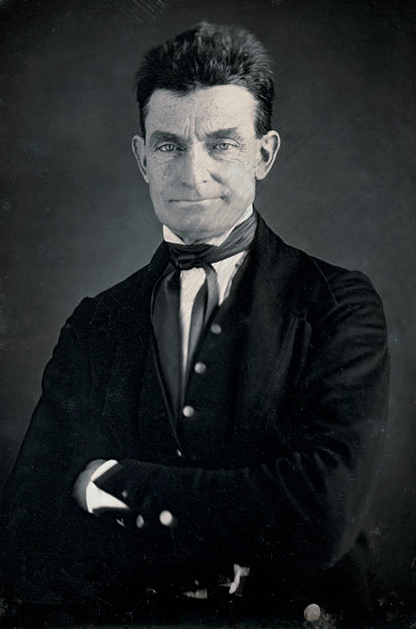
John Brown was the U.
S. abolitionist militant executed after the October 1859 Harpers Ferry raid. In the vault, he matters because Haitian president Fabre Geffrard declared a national day of mourning for Brown and offered assistance to his widow — revealing Haiti's continuing role in nineteenth-century Black Atlantic emancipation politics and its identification with radical antislavery action that the United States refused to recognize. His Haitian reception makes him historically significant not as an American figure alone but as a node in Haiti's transnational emancipation imaginary.
In the ScholarshipHow historians have read this figure.
How historians and scholars have interpreted this figure across different analytical traditions.
Plummer's Haiti and the United States situates John Brown within the transatlantic abolitionist network that connected Haitian sovereignty to African American freedom struggles — a connection that Brown made explicit through his admiration for the Haitian Revolution and his recruitment of Haitian-Américains for the Harper's Ferry raid. Plummer traces how Brown's Haiti connections — including his correspondence with James Redpath and the broader Haitian emigration project — reflected a Black Atlantic political imagination that saw Haitian independence as proof of what organized Black resistance could achieve. His execution in 1859 made him a martyr of the American antislavery movement, but the Haiti dimension of his political imagination has been underemphasized in the standard historiography.
Brown's Haiti connections — his admiration for the Haitian Revolution and recruitment of Haitian-Américains — reflected a Black Atlantic political imagination that saw Haitian independence as proof of what organized Black resistance could achieve.
TimelineAcross the historical record.
- 1816
Bolívar in Haiti
Like Bolívar's support, Brown's reception in Haiti demonstrates the republic's active role in hemispheric emancipation politics beyond its own borders.