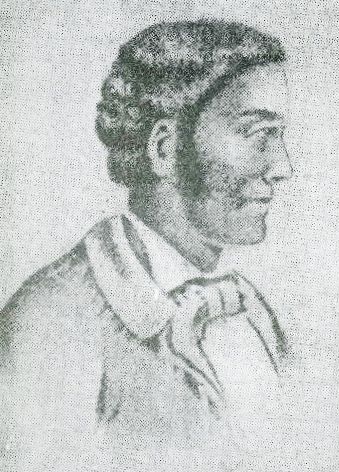
Jean-Baptiste Chavanne was a free man of color, small-scale planter, and veteran of the Savannah campaign in the American Revolution who co-led the October 1790 uprising at Grande-Rivière-du-Nord alongside Vincent Ogé.
The two men disagreed fundamentally on strategy: Chavanne urged Ogé to free enslaved people and recruit them to their cause — 250 enslaved fighters had responded to the call — but Ogé categorically refused, insisting their struggle concerned only propertied free coloreds. Chavanne's more radical and inclusive vision proved strategically correct; the Haitian Revolution only succeeded when it became the broad liberation struggle he had proposed. He was executed by breaking on the wheel on February 23, 1791, reportedly protesting to the last moment against the oppression of people of African descent.
In the ScholarshipHow historians have read this figure.
How historians and scholars have interpreted this figure across different analytical traditions.
Dubois's Avengers of the New World reads the Ogé-Chavannes revolt and execution as the event that crystallized Saint-Domingue's irresolvable contradictions on the eve of the 1791 insurrection. Dubois situates Chavannes within the broader account of how the free-colored community's attempt to negotiate inclusion in the colonial order through armed demonstration — rather than through alliance with the enslaved — failed precisely because the colonial system could not offer what they demanded without destroying itself. The public torture-execution of both men on the wheel in Cap-Français, witnessed by thousands of enslaved and free people, appears in Dubois's account as the event that made the summer of 1791 possible: demonstrating to the enslaved that the colonial order's violence knew no limits, and that reform was impossible.
The torture-execution of Ogé and Chavannes witnessed by thousands demonstrated that colonial order's violence knew no limits — making the summer of 1791 possible by proving that reform was impossible.
Garrigus's Before Haiti situates Jean-Baptiste Chavannes as Vincent Ogé's co-conspirator whose more radical vision — including the proposal to arm the enslaved that Ogé refused — marks the dividing line within affranchis political culture between class-limited reform and a more expansive revolutionary politics. Garrigus's social history allows him to trace Chavannes's background as a Chasseurs-Volontaires veteran and small planter whose social position within the free-colored community was less secure than Ogé's — a class difference that may explain his greater willingness to consider the enslaved majority as potential allies. Both were broken on the wheel in Cap-Français in February 1791, but Chavannes appears in Garrigus's account as the figure who pointed toward the revolutionary politics that Ogé's class formation prevented him from reaching.
Chavannes's proposal to arm the enslaved marks the dividing line within affranchis political culture — his greater radicalism may reflect his less secure class position relative to Ogé, pointing toward the revolutionary politics Ogé's formation prevented him from reaching.
TimelineAcross the historical record.
- 1790-10
Ogé Revolt 1790
Co-led the October 1790 armed uprising, assembling 250-300 free men of color to demand enforcement of voting rights.